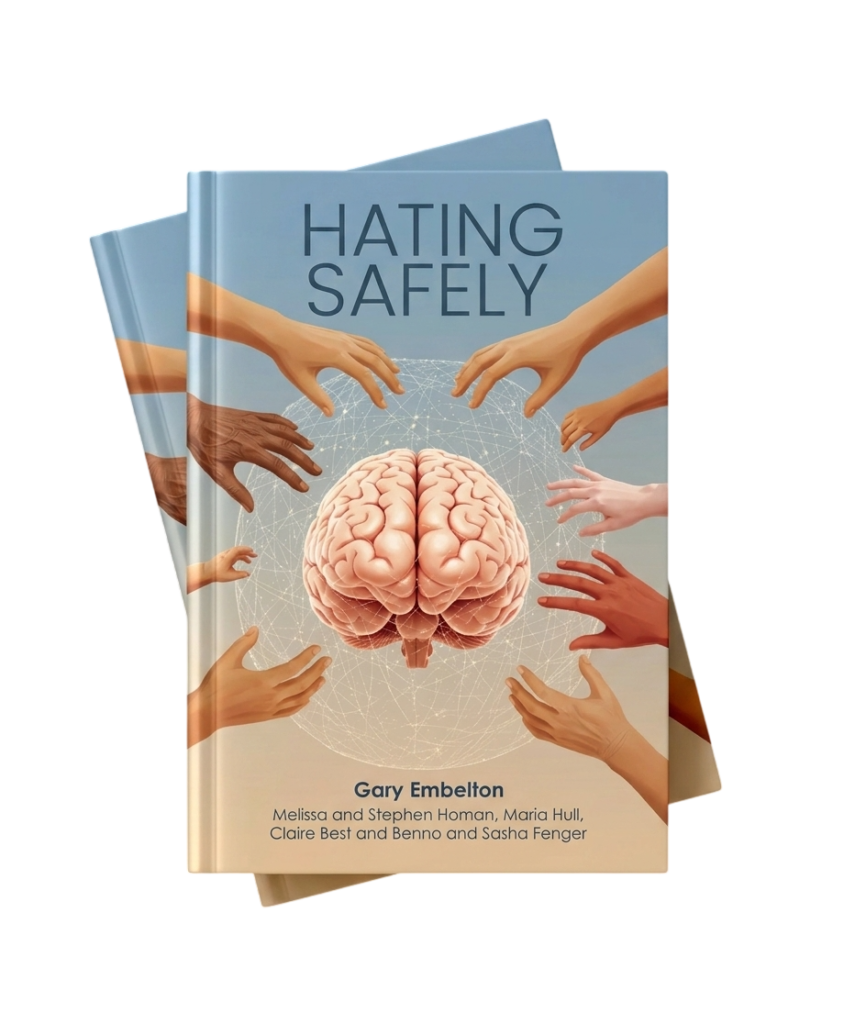
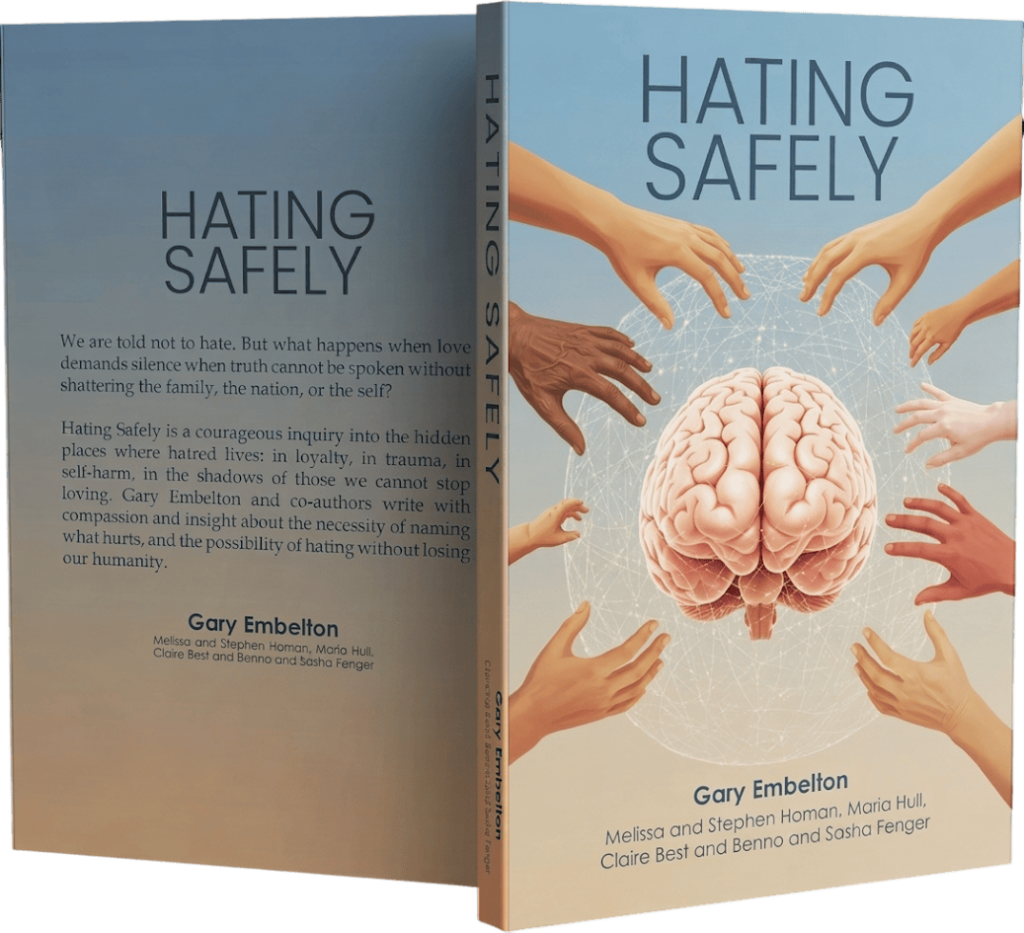


What if acknowledging hate is the beginning of healing?
Hate is a powerful and often misunderstood human emotion. When ignored or silenced, it can shape our inner lives, relationships, and societies in destructive ways. Hating Safely invites a thoughtful exploration of hate, how it forms, how it affects us, and how acknowledging it within safe boundaries can become the beginning of understanding, growth, and healing.
Hate is not an anomaly; it is a human response that emerges from fear, frustration, loss, and unmet emotional needs. Often rooted in self-hate and early relational experiences, hate develops as a way to protect ourselves from feelings of abandonment, shame, or emotional overwhelm. When left unexamined, it quietly shapes how we think, feel, and relate to others.
We are taught that hate is unacceptable, dangerous, or morally wrong. As a result, many people suppress it rather than express it. Silence can feel safer than risking rejection, conflict, or judgment. Yet unspoken hate does not disappear—it turns inward, manifests in the body, and disrupts relationships, often in ways we do not immediately recognise.
Naming hate brings it out of the shadows and into conscious awareness. When acknowledged within safe boundaries, hate can be understood rather than acted out. This process reduces its destructive power and opens the possibility for insight, emotional regulation, and genuine connection. Naming hate is not about harm; it is about responsibility, containment, and healing.
Hating Safely offers a framework for understanding emotions that are often misunderstood or avoided. Drawing on decades of clinical experience, it provides insight into how hate develops, how it operates beneath the surface of everyday life, and how it can be expressed safely without causing harm. These insights support individuals, families, and professionals in navigating complex emotional landscapes with greater awareness and responsibility.

Much of what drives our behaviour lies outside conscious awareness. Unexpressed hate, fear, and self-loathing often operate beneath the surface, influencing relationships, health, and decision-making. Recognising these hidden dynamics is the first step toward emotional clarity and change.

Love and hate are not opposites; they are closely connected. In intimate relationships, hate often emerges from fears of abandonment, engulfment, or loss of identity. Understanding this connection allows relationships to move beyond blame and toward deeper honesty and emotional maturity.

When emotions are expressed without safety, conflict escalates into harm or withdrawal. Creating clear emotional and relational boundaries allows intense feelings to be contained rather than acted out. Safety transforms conflict into dialogue and makes growth possible even in moments of deep disagreement.

Silence around hate perpetuates shame and repetition. When individuals, families, and communities learn to name and hold difficult emotions safely, destructive cycles can be interrupted. Speaking what has long been unspoken opens space for healing, accountability, and connection.

A collaborative team of experienced mental health professionals bringing diverse clinical expertise, insight, and depth to the work of Hating Safely.
Gary is a former Professor of Psychology and psychoanalytic psychotherapist with 30 years’ experience at Queensland Ambulance. His work focused on trauma, family dynamics, and counselling training. He believes “hating safely,” inspired by Dr. Carl Whittaker, is essential to psychotherapy.
Melissa Homan is a Registered Mental Health Nurse with 39 years’ experience in public and private care. She co-developed the Get Real teenage eating disorder program and a postnatal depression group therapy model. Her work integrates psychodynamic, attachment, CBT, and positive parenting principles.
Claire Best is a general and mental health nurse, and counsellor, with international nursing experience across the UK, Ireland, Canada, and Australia. She holds a Master of Nursing (Mental Health) with postgraduate qualifications in holistic counselling and addiction studies.
is a Credentialed Mental Health Nurse with over 38 years of nursing and teaching experience. Trained in Germany and Australia, he holds Bachelor’s and Master’s degrees and has led Indigenous mental health education, cultural programs, and group therapy.
Maria Hull is a registered Clinical Counsellor specialising in relationships, with over ten years of private practice experience. She holds a Master of Counselling and was the first female NSW Police Officer in the Lower Clarence River region.
is a Credentialed and Authorized Mental Health Nurse with Queensland Health, bringing over 40 years of experience. She progressed from Enrolled Nurse to earning Bachelor’s and Master’s degrees, with extensive work in community mental health.
Hate is one of the most misunderstood human emotions—often denied, suppressed, or feared. When left unspoken, it silently shapes relationships, bodies, and societies, expressing itself through conflict, withdrawal, illness, or harm. Hating Safely invites a courageous re-examination of this powerful emotion, revealing how acknowledging and containing hate can deepen understanding, restore connection, and prevent its destructive expression.
Rebuilding cycles of silence
Breaking cycles of shame.
Discover a thoughtful approach to understanding hate, fostering emotional safety, and building deeper, more honest human connections.
A thoughtful exploration of the emotions we fear, the silence we carry, and the relationships we long to protect. By bringing hate into conscious awareness, we create space for responsibility, understanding, and genuine human connection.